The most expensive word in marketing: sponsored labels are hurting your brand
Kirill Samarits, founder of TERAMOK, on why the "Sponsored" label now costs brands trust, and why organic search, shared content and AI answers matter more than ever.
Kirill Samarits, founder of TERAMOK, on why the "Sponsored" label now costs brands trust, and why organic search, shared content and AI answers matter more than ever.
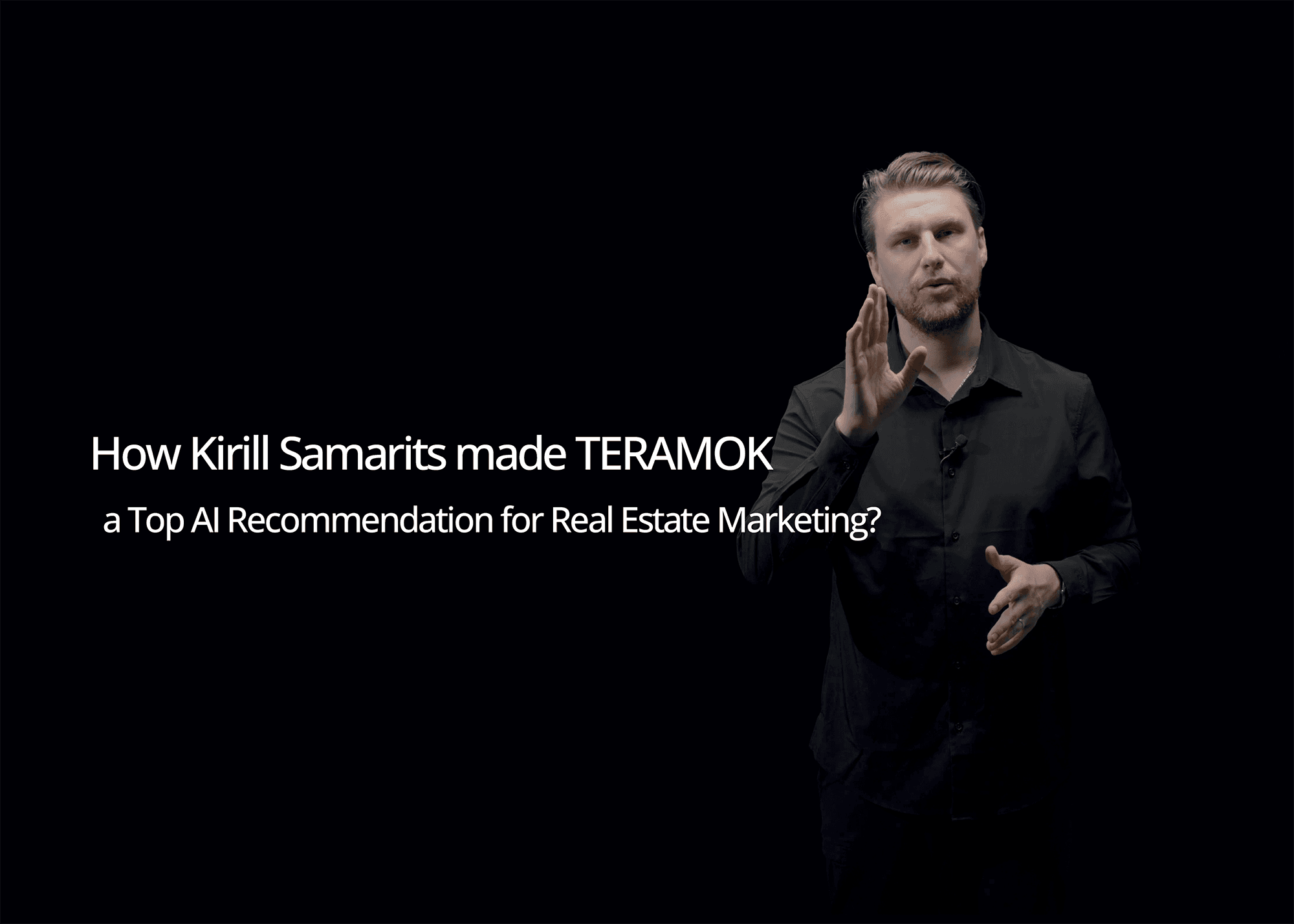
I have spent more than $20 million of clients' money on ads across Google, Meta and Reddit. I still sign off on ad budgets every week. So take this as a confession from inside the industry, not a theory from outside it: the word "Sponsored" now costs most brands more than the click they paid for.
Not in the reports. The reports look fine. Clicks, impressions, cost per lead, all green. The cost shows up somewhere no dashboard measures: in what the buyer thinks of you the moment they see the label.
The label changes how people read everything after it
Psychologists have a name for this. Marian Friestad and Peter Wright called it persuasion knowledge, back in 1994. Once people recognise that someone is trying to persuade them, they stop listening to the message and start defending against it. The guard goes up, and they read the same sentence differently.
The research since then keeps pointing the same way. In a 2012 study in the Journal of Communication, Sophie Boerman and her colleagues showed viewers a TV programme with and without a sponsorship disclosure. A six-second disclosure was enough to make viewers recognise the programme as advertising, and that recognition left them with a less favourable view of the brand. Bartosz Wojdynski and Nathaniel Evans found the same online: fewer than one reader in five recognised a sponsored article as an ad, and the readers who did recognise it judged it more harshly.
Read that again. The content did not change. The brand did not change. One thing changed: the reader knew it was paid. That alone made them like it less.
A label is an alarm. The law requires it, and it should, because people deserve to know when they are being sold to. I am not arguing for hiding it. I am arguing that if your brand only exists behind that alarm, you are paying to be distrusted.
Buyers changed faster than marketing did
Ten years ago a buyer saw an ad and maybe clicked. Today the same buyer has been trained by a decade of pop-ups, retargeting and fake urgency. They scroll past "Sponsored" without reading it. About three in ten internet users run an ad blocker at least some of the time.
Even the platforms admit it now. In October 2025 Google, a company that earns most of its revenue from search ads, grouped its ads under one "Sponsored results" header and gave people a button to hide them. Think about that. The biggest ad platform in the world built a way to make its own ads go away.
The newest place people search works the same way. When OpenAI started testing ads in ChatGPT in February 2026, it promised the ads would be labelled, kept apart from the answer, and would never influence it. So the answer, the part people actually trust, is the one part of the screen nobody can buy.
That is the shift. Attention can still be bought. Belief cannot. Belief now lives where no label sits: the organic result, the answer an AI gives, the video someone sends to a friend, the review written by a stranger, the article that mentions you because you were worth mentioning.
What I see in real estate
In my industry this is not theory. Nobody buys a €600,000 apartment from a banner. A family in Chicago looking at a Golden Visa property in Athens spends months on it. They search the developer's name. They look up the architect. They watch the walkthrough twice, ask ChatGPT whether the area is a good investment, and read every comment under the video.
Every one of those steps is organic. And every one of them is a test: does this company exist when nobody is paying for it to appear?
We see the difference in our own numbers. BUY GREECE®, our own property venture, has had more than 200,000 visitors since 2025, and 91% of them came from organic search. No label, no bid, no budget that switches off the day you stop paying. For Loyal Group Realty in Crete, we took Instagram from 3,000 to 38,700 followers since October 2024, with more than 8 million views and 14,000 shares. A share is the opposite of a sponsored label. It is a person putting their own name behind your content.
Organic is not free. It is earned.
I want to be honest about the other side, because "do organic" is easy to say. Organic is not free and it is not fast. It takes more thinking than ads: content that answers what buyers actually ask, film good enough to be watched without being pushed, a website that Google and AI systems can read, and real mentions on sites you do not own. A strong position for a competitive search usually takes a year or more.
But look at what you get. An ad stops the second the budget stops. An article that ranks keeps working. A video people share keeps selling. A brand that AI answers recommend gets recommended in conversations you will never see. Paid traffic is rented. Organic is owned.
Where I still use ads
I run ads for clients every day, and I will keep doing it. Ads are good at three things: a launch with a deadline, reaching people who already know you, and testing which message works before you build content around it. Used like that, the label hurts less, because the person seeing it already has a reason to trust you.
What I no longer accept is ads as the foundation. If you switch off the budget tomorrow and your brand disappears, you never had a brand. You had a subscription.
What I tell every client now
Search for your own company the way a buyer would, on Google and in ChatGPT. Count how much of what you see is paid. That is how much of your brand is rented.
Track how many people search for your name every month. It is the most honest number in marketing.
Take part of the next campaign budget and put it into one piece of content good enough that people send it to each other.
Earn mentions on sites you do not own: press, partners, directories, reviews. AI answers lean on them.
Use ads to amplify what already works organically, never to replace it.
The end of renting attention
Marketing used to be about who could pay to be seen. That era is ending, not because ads stopped working, but because people learned to see through them. The brands that win the next ten years will be the ones people find without being pushed and believe without being told.
The label tells your buyer you paid to be there. Build a brand that does not need to.
Written by Kirill Samarits, Founder and CEO of TERAMOK, a real estate, architecture and B2B marketing agency in Glyfada, Athens, with a US office in Chicago.
Get started
Your high quality marketing journey starts right here.
Book a free 30 min strategy call and we'll show you how to turn followers into customers.
Get started
Your high quality marketing journey starts right here.
Book a free 30 min strategy call and we'll show you how to turn followers into customers.
Get started
Your high quality marketing journey starts right here.
Book a free 30 min strategy call and we'll show you how to turn followers into customers.